The Camouflage of a “Printing” Company
When you hear the name DNP (Dai Nippon Printing), what comes to mind? If you’re picturing a legacy business churning out books and magazines, your perception is quite outdated. Today, DNP is a hardcore high-tech enterprise, generating more than 60% of its operating profit from advanced materials and semiconductor components. Overcoming the long-term decline in the publishing industry, DNP championed a vision of “expanding printing.” That vision has now materialized into a powerful portfolio—driven by next-generation glass core substrates for semiconductors and aggressive capital efficiency reforms—yielding an impressive ¥101 billion in operating profit. Let’s dig into the real cash-generating power of the reborn DNP and explore its appeal for value investors.
Breaking Boundaries: Glass Core Substrates and Next-Gen Semiconductors
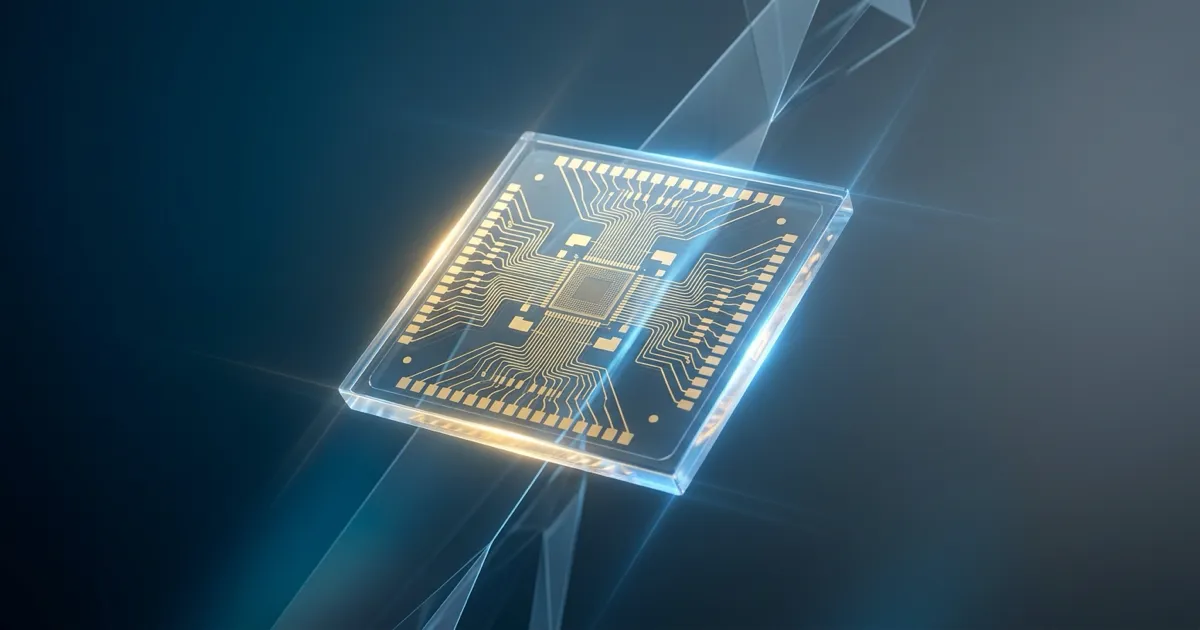
DNP’s wide moat lies in repurposing its microfabrication (photolithography) and coating technologies, honed over decades in printing, for high-growth sectors. The Electronics segment is particularly noteworthy. Currently, the packaging substrates for AI semiconductors urgently need to transition from conventional resins to glass. DNP is positioned as a game-changer with its Through Glass Via (TGV) glass core substrates, which solve the bottlenecks of miniaturization and larger form factors. A pilot line is already operational at the Kuki plant in Saitama, ready to provide high-quality samples starting in January 2026. Furthermore, by investing in Rapidus—a project aiming for domestic production of advanced logic semiconductors—DNP is strategically securing its role in core next-generation computing technologies. Having shed its reliance on publishing, DNP has built a resilient structure where all three segments (Life & Healthcare, Electronics, and Information Innovation) each generate between ¥35 billion and ¥50 billion in operating profit. This structural transformation is the foundation of DNP’s competitive edge.
On Track for Record Profits
Recent results show a clear trajectory.
| Metric | 2024 | 2025 | 2026 |
|---|---|---|---|
| Revenue (¥bn) | 1424.82 | 1457.61 | 1512.57 |
| Net income (¥bn) | 110.93 | 110.68 | 103.96 |
| Net profit margin | 7.8% | 7.6% | 6.9% |
Revenue for the fiscal year ending March 2026 grew steadily to ¥1,512.5 billion. What really stands out is the operating profit. Thanks in part to structural reforms (adding ¥32.8 billion), it surged from ¥61.2 billion in FY2022 to ¥101.0 billion. While net income shows a slight dip, this is merely due to the absence of one-time factors like gains from the sale of cross-shareholdings; the core earning power is actually improving. With a target of ¥130 billion in operating profit by FY2028—which would be an all-time high—expectations for growth are solid.
Assessing the True Cash Generation Power
Beyond accounting profits, we need to check the “owner earnings,” which represent the true value for shareholders.
(* Simulation assumptions: estimated share price 3,101 yen, required return 5%)
| Metric | 2024 | 2025 | 2026 |
|---|---|---|---|
| Owner earnings (¥bn) | 83.29 | 71.99 | 16.56 |
| Owner earnings value (¥bn) | 1665.88 | 1439.82 | 331.32 |
The owner earnings for 2026 appear to have plummeted to ¥16.5 billion. However, the primary reason is a massive capital expenditure (CapEx) of ¥87.7 billion, focused heavily on advanced semiconductors (TGV glass core substrates, EUV-related products) and wide optical films. This is not merely maintenance CapEx to keep the lights on; it’s an aggressive cash outflow aimed at future growth. Considering the total consolidated depreciation of ¥52.8 billion reported in the financials, DNP’s underlying cash-generating capacity is comfortably in the ¥50–70 billion range annually.
Solid Financial Footing and Capital Efficiency Reforms
The balance sheet that underwrites that spending is just as important.
| Metric | 2024 | 2025 | 2026 |
|---|---|---|---|
| Net cash (¥bn) | 340.04 | 386.97 | 350.21 |
| Net current asset ratio | 45.7% | 27.6% | 26.1% |
With ¥350.2 billion in net cash, DNP’s financial position is exceptionally robust. It is exactly this fortress balance sheet that allows them to endure the massive upfront investments mentioned earlier. Equally important is their intense focus on capital efficiency reforms. DNP has committed to reducing its cross-shareholdings to less than 10% of consolidated net assets. Using the ¥300+ billion in cash generated from this move, they plan to execute at least ¥80 billion in share buybacks over two years, alongside a progressive dividend with a floor of ¥40. This serious commitment to shareholder returns is a strong catalyst for PBR improvement and the market’s re-evaluation story.
Blind Spots in a Brilliant Transformation
The transformation is not without its blind spots. The Electronics segment is sensitive to market cycles. If the shortage of semiconductor memory or the slowdown in smartphone production drags on, demand for digital interfaces and metal masks will suffer. Additionally, while TGV glass core substrates are highly promising, the timing for full-scale mass adoption by semiconductor packaging companies remains uncertain. Furthermore, managing the rising costs of energy and raw materials—driven by Middle East tensions—through appropriate price pass-throughs in other segments like Life & Healthcare will be crucial to maintaining overall profit margins.
A Buy, with Conditions
DNP today is not just a “cheap legacy company.” It is a highly attractive investment that offers the upside of a next-generation semiconductor stock, backed by the downside protection of a fortress balance sheet. The combination of structural reform-driven margin expansion and aggressive shareholder returns provides a sufficient margin of safety against the current market valuation (an estimated market cap of around ¥1.34 trillion).
I am considering a buy, subject to the following triggers.
Triggers for a bullish view:
- Confirmation in quarterly reports of mass production progress and profit growth in the Electronics segment, particularly regarding semiconductor-related products and TGV glass core substrates.
- Scheduled progress in the reduction of cross-shareholdings, accompanied by timely disclosures of new share buyback programs.
Triggers for a wait-and-see/cautious view:
- A prolonged slump in the smartphone and PC markets causing the quarterly operating profit margin of the Electronics segment to deteriorate beyond expectations.
- Delays in passing on higher raw material costs, leading to a retreat in company-wide profit levels.
Want to simulate the "fair value" of Dai Nippon Printing Co.,Ltd.?
Interested in digging deeper into the financial data for Dai Nippon Printing Co.,Ltd. featured in this article?
At okuriru.com, you can run simulations for Dai Nippon Printing Co.,Ltd. based on Buffett-style "owner earnings." Enter your required rate of return (hurdle rate) to instantly calculate a theoretical stock price.
👉 Calculate Dai Nippon Printing Co.,Ltd.'s theoretical stock price
Resolve the question "Is this stock fairly priced?" using your own criteria. CSV downloads of financial data are available too!